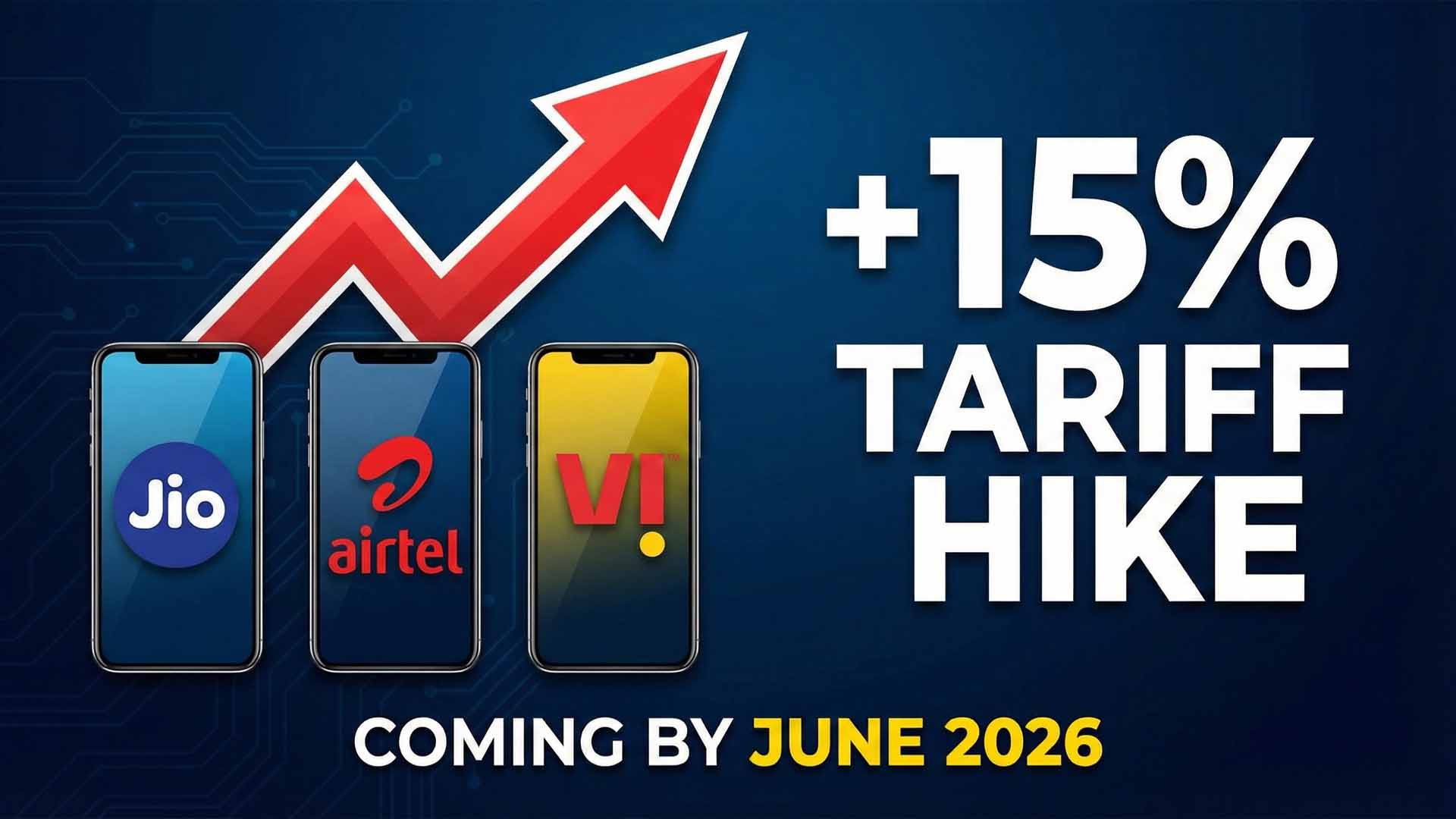
New Delhi, India — If you’re already wincing at your monthly recharge costs, brace yourself — India’s big three telecom players are gearing up for another round of price increases, with analysts predicting a roughly 15% jump across mobile plans starting around June 2026.
The forecast comes primarily from brokerage firm Jefferies, which in a recent note said the hike aligns with historical patterns — roughly two years after the last major adjustments in mid-2024 — and could be triggered by Reliance Jio’s much-anticipated initial public offering planned for the first half of the year. Once Jio moves, Bharti Airtel and Vodafone Idea (Vi) are almost certain to follow suit, as they’ve done in every previous cycle.
“This would be in line with trends in the past,” Jefferies analysts wrote, pointing out that such increases have become a predictable rhythm in the sector. They expect the headline hike to translate into a solid 14% boost in average revenue per user (ARPU) by fiscal 2027, giving the companies more breathing room after heavy investments in 5G rollout.
Other firms are on a similar page. Bank of America has flagged a potential increase in the second half of 2026, while earlier reports from Morgan Stanley had penciled in even steeper 16-20% rises across prepaid and postpaid plans. The consensus seems to be settling around that 15% mark, especially with Jio’s IPO looming as a catalyst to justify premium pricing and narrow valuation gaps with rivals like Airtel.
None of the operators — Jio, Airtel, or Vi — have officially confirmed any plans yet, and company spokespersons declined to comment when approached. But the writing’s been on the wall for months: all three have quietly phased out cheaper entry-level packs, nudging customers toward pricier options loaded with more data and OTT perks. It’s a soft way of hiking effective costs without the headlines.
For consumers, it’s another pinch on the wallet at a time when inflation is already biting. The last round in 2024 pushed basic monthly plans well above ₹200 for many, and this one could add another ₹30-50 depending on your pack. Low-income users and those with multiple SIMs will feel it the most, though analysts argue the industry needs these repairs to stay profitable amid cut-throat competition and massive capex.
On the brighter side for the telcos, the moves should juice up revenues significantly. Jefferies projects the sector’s growth could more than double post-hike, while helping Vi — still struggling with debt and subscriber churn — stay afloat a bit longer.
It’s a familiar story in Indian telecom: prices go up, some customers grumble and consolidate SIMs, but eventually everyone adjusts. With 5G now widespread and data usage exploding, the operators seem confident the market can bear it. Whether consumers agree is another question — but come June, we’ll likely find out.