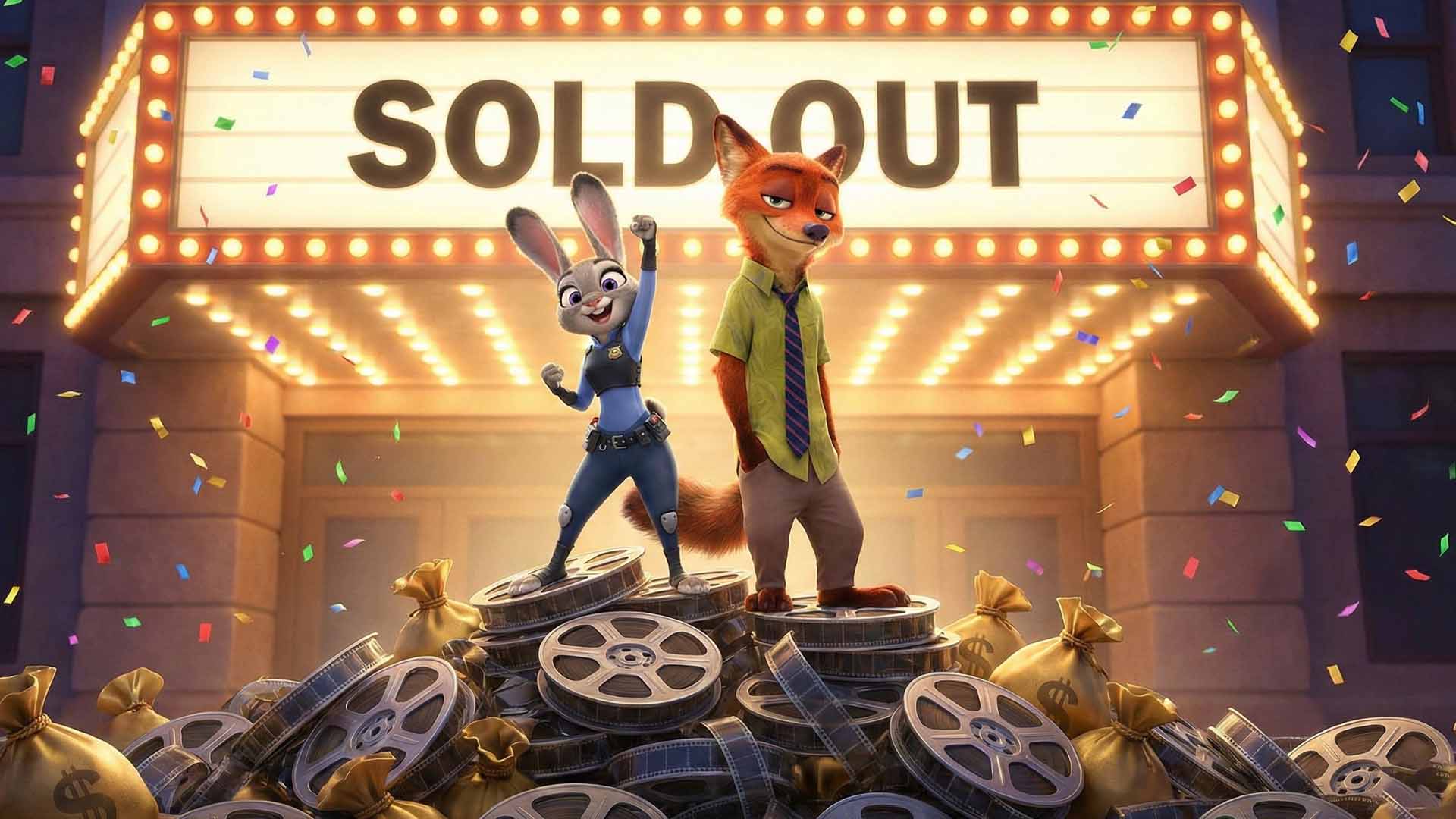
For the past two years, the headlines coming out of Hollywood have been grim. We’ve read the obituaries for the “Cinematic Universe.” We’ve watched surefire superhero sequels crash and burn, and we’ve seen audiences reject nostalgia bait that felt more like a boardroom spreadsheet than a movie. The industry diagnosis was unanimous: the audience has “Sequel Fatigue.”
Then came Zootopia 2.
By shattering the all-time box office record for an animated film this January—dethroning giants like Inside Out 2 and Frozen II—Disney’s return to the mammal metropolis didn’t just make money. It dismantled the myth that audiences are tired of franchises. They aren’t tired of sequels; they are tired of lazy ones.
So, how did a follow-up to a 2016 film manage to revitalize the global box office when so many other IP giants stumbled? The answer lies in three distinct deviations from the modern Hollywood playbook.
1. The “Decade Rule”: Scarcity Creates Value
In the streaming era, studios are obsessed with “content churn.” If a movie hits, they want a sequel in two years and a spin-off series in three. This saturation kills anticipation.
Zootopia 2 took a different route: The 10-Year Gap.
By waiting a full decade, Disney allowed the original film to ferment in the cultural consciousness. Kids who watched the first one in elementary school are now driving themselves to theaters as young adults. There was no over-saturation, no Disney+ TV show to dilute the brand. When the trailer dropped, it felt like an event, not an obligation. It proved that in an attention economy, absence truly makes the heart grow fonder.
2. Expanding the World, Not Just the Stakes
The mistake most recent blockbusters make is raising the stakes artificially. If the first movie was about saving the city, the sequel tries to save the universe. It becomes noisy and hollow.
Zootopia 2 succeeded because it respected the genre of the original: it’s a buddy-cop noir, not an action epic. The writers didn’t try to make Judy Hopps a superhero. Instead, they leaned into the “World Building.”
By taking audiences to previously unseen districts—like the nocturnal zones and the aquatic sectors—the film offered visual novelty. It didn’t just rehash the same jokes in the same setting. It promised a travelogue to a new corner of a world we already loved. This is the difference between expansion and repetition.
3. The “Four-Quadrant” Safety Net
While the box office for superhero films has skewed heavily male and young, and princess movies skew female, Zootopia 2 pulled off the rare “Four-Quadrant” miracle: Men, Women, Under-25s, and Over-25s.
The film operates on two distinct frequencies. For children, it is a colorful romp with slapstick humor. For adults, it is a surprisingly sharp political thriller tackling bureaucratic corruption and class divides. This dual layering meant that parents didn’t just drop their kids off at the cinema; they bought tickets for themselves.
The Verdict
The success of Zootopia 2 sends a clear message to studio executives panicking over their slates. The audience hasn’t given up on familiar characters. We are simply demanding that if you make us wait, you make it worth our time.
Disney didn’t just release a sequel; they released a movie that felt necessary. And in a landscape of cash grabs, “necessary” is the most profitable quality of all.